

Fast Horse, No Rider: Why AI on its own won’t make your organisation more productive
PARC’s conference on the Technology Paradox, looking at how organisations might leverage the emerging AI developments to improve performance, came at an opportune moment. For two decades, technology has been advancing at pace with barely any impact on aggregate productivity. In early 2026, there were finally some indications that the rapid advances in AI were beginning to have an impact on workplaces and employment. There is a sense that we might be on the cusp of something positive for productivity levels, whilst evidence for that remains elusive.
The conference also coincided with Earth Day – a reminder that neither energy resources nor the planet’s capacity to absorb greenhouse gases are infinite. Whether an energy-hungry technology will help humanity mitigate global heating, or make it worse, was one of the many ‘wild cards’ under discussion.
Nina Jorden was our first speaker. She explained that with working-age populations shrinking we need to grow output per person just to stay level. But productivity growth has stagnated in the advanced economies and even the hitherto dynamic emerging markets have slowed down over the last decade. No wonder then, that great hopes have been pinned on an AI-enabled productivity boom. Without it we face, in all likelihood, low growth, austerity and tax increases.
The trouble is, productivity improvement won’t come from simply implementing AI technology. It needs the supporting organisational capital – comprising of human capital, organisational structures and, crucially, strong relationships and levels of trust within the organisation.
Organisational Productivity needs Organisational Capital
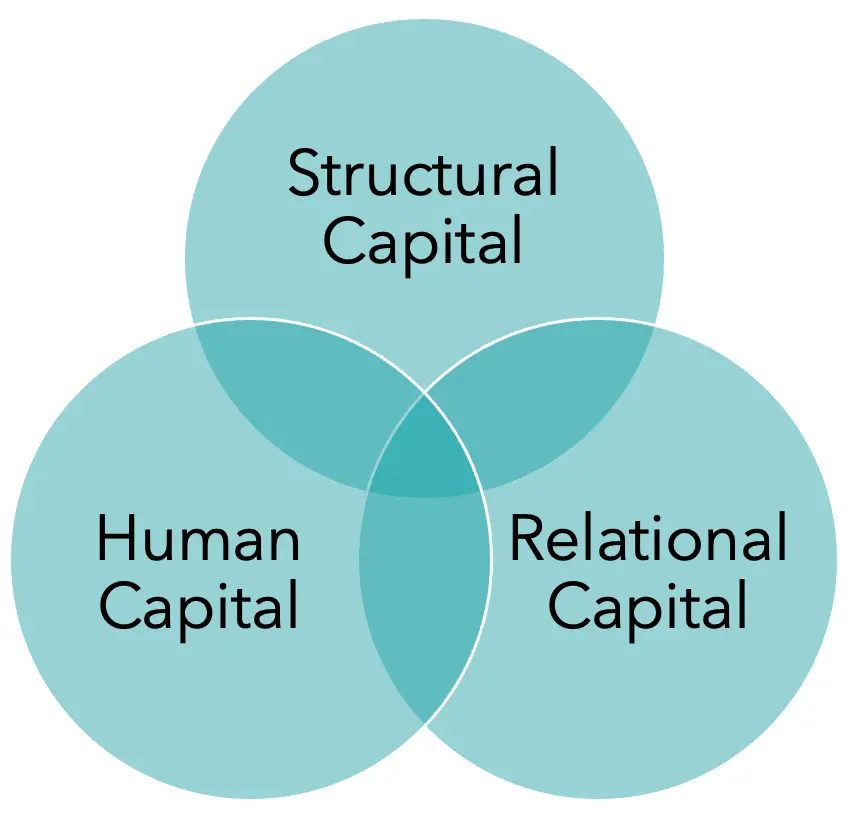
Technology is an input. Organisational capital is the conversion mechanism by which it is turned into outcomes and performance.
Marleen Huysman was next to the stage. Her method of ethnographic research involves spending long periods studying the adoption and use of technology within specific organisations. She shared her findings that show turning AI into performance improvement if often a lot more difficult than it sounds. Generative AI is being adopted in the same way as social media platforms were a decade ago. People are bringing their own AI into work. This is already undermining the social fabric of the workplace, bypassing internal expertise and disrupting patterns of trust. Generative AI is like a spirited horse – it is fast and exciting but also potentially dangerous. Without a skilled rider, there is no telling where it may end up or what damage it may cause. In short, without adequate guardrails it can erode rather than enhance organisational capital.
Crucial to exploiting this technology is the quality of the people and their cohesiveness as a team. Drawing on his experience at Spotify, Skype and several tech startups, our third speaker, Faisal Galaria reminded us that technology is fungible. It is widely available and, though some applications have their devotees, it’s not difficult to replace one with another. What really counts is what you do with it and that is down to the behaviour of the people in the organisation – particularly the ‘athletes’ who strive to do things better and the ‘pirates’ who look for ways to do things differently. As Faisal remarked, ‘we’ve seen this film before’. Technology reshapes work but it never eliminates the need for human ingenuity.
Giving people the freedom to develop an AI system tailored to their needs enabled Tony Clements’ team at Ealing Council to find out who its ‘pirates’ were. Local government’s severe budgetary constraints meant there was little scope for an expensive development project, yet the council’s social services function was able to create a system that enabled significant performance improvements, cost savings and the freeing up of professionals’ time to enhance the service. Social worker Joanna James’s explanation of how it changed her job provided a powerful story of AI’s impact on the front line.
Since we wrote the report for the conference, figures from the US have shown that, while AI is replacing junior software engineers in tech companies, it is enhancing the roles of senior developers, especially those working outside the tech industry. Those in jobs where their programming skills are combined with business-specific expertise are finding that AI becomes an assistant, enhancing rather than eroding the job. When coding is done by AI, senior technical experts have more time to spend on rest of their jobs, especially translating business needs into product specifications. As the FT’s John Burn-Murdoch put it, “AI automates a relatively lower-value part of their job and acts as a multiplier on all the rest.”
The day after Earth Day, the UK government released figures which suggest that the water consumption and greenhouse gas emissions from AI data centres have been vastly underestimated, the latter by a factor of more than 100! No doubt the question of AI’s environmental impact will continue to be as hotly disputed as its employment impacts. With energy supplies volatile and the impact of global heating gathering pace, the environmental considerations are yet another complicating factor making predictions about the speed of AI development very difficult. Coupled with this is the increasing cost of usage that will start to hit the consumer as the providers of AI look to turn a profit. The increasing cost of usage could lead to AI becoming a tool for the wealthy only.
The discussions at PARC’s Technology Paradox conference show that there is a great deal of energy, interest and knowledge around this subject both within the PARC membership and among the experts we consulted. This is a rapidly moving subject so we will be taking regular checkpoints on it over the next year and will do a review of the situation in 2027. Watch this space!